To Promote Science-Informed (Neuroscience/Evidence-Based Overall Individual Well-Being Focused, Instead of Economy Only Narrow Focus) Educational Systems Transformation Leading to a Social Revolution of Sustainability!
Human Thriving and Flourishing Meditation (Human Potential Prayer)
A Complementary Form to Lovingkindness (Metta) Meditation
Lovingkindness as the essential precursor to human learning, development, thriving and flourishing, individually as well as collectively
May all living beings on the planet (me included), no matter the inherent differences
get the opportunity to develop their integrated, deepest, authentic selves over time
to serve the planet as best as they can
in their unique ways
May all living beings on the planet (me included), no matter the inherent differences
get adequate resources to develop their integrated, deepest, authentic selves over time
to serve the planet as best as they can
in their unique ways
May all living beings on the planet (me included), no matter the inherent differences
get conducive environments to develop their integrated, deepest, authentic selves over time
to serve the planet as best as they can
in their unique ways
May all living beings on the planet (me included), no matter the inherent differences
develop the motivation and urgency to develop their integrated, deepest, authentic
selves over time
to serve the planet as best as they can,
in their unique ways
In this way, may all living beings on the planet (me included), no matter the inherent differences
get the opportunity to develop well-being leading to thriving and flourishing
in their unique, authentic, deepest, and holistic ways
while contributing to the sustainability of the planet
In this way, may all living beings on the planet (me included), no matter the inherent differences
come to the realisation/actualisation/transcendence of
the connectedness of living things/beings and various systems
either directly or distinct indirect ways
leading to enforcement of the equilibrium of the vast ecosystem we live in.
FOR ACHIEVING EDUCATIONAL TRANSFORMATIONS THROUGH MINDFUL, GRASSROOTS LEVEL, INDIVIDUAL LEARNER TRANSFORMATION IN ALL IMPORTANT AND ESSENTIAL DOMAINS OF COGNITIVE, EMOTIONAL AND SOCIAL LEADING TO A SUSTAINABLE SOCIAL TRANSFORMATION!
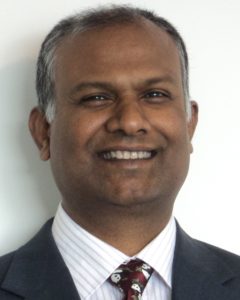
For over a decade, Chandana’s integrated inquiry-based engagements were broadly in the areas of whole-person development, human development, learning and development, human thriving and flourishing and so on. The related areas he studied, read, listened, watched and published heavily include the neuroscience of learning, educational neuroscience, social-emotional learning (SEL), mindfulness, self-awareness, empathy, compassion, emotional intelligence, resilience, well-being and meaning and purpose.
Chandana has undergone formal training, notably in emotional intelligence from GolemanEI and compassionate integrity (CIT) from the Charter for Compassion and other interpersonal neurobiology training from the Mindsight Institute. Currently, he is in the middle of completing the first Inner MBA program organised by Sounds True, LinkedIn, Wisdom 2.0, and NYU in 2020. Moreover, Chandana is undergoing coaching with Empowerment Holdings’ Breakthrough Group. Notable contributions he has made include two self-published books: “Programming the Brain: Educational Neuroscience Perspective Pedagogical Practices and Study Skills for Enhanced Learning and Metacognition Second Edition Updated by Relating to Social-Emotional Learning (SEL) Based on Mindfulness, Self-Awareness, and Emotional Intelligence” and “Education from a Deeper and Multidisciplinary Perspective: For a Sustainable Development of the Neurodiverse Society, a Futuristic View Second Edition Enhanced by Relating to Social-Emotional Learning (SEL) Based on Mindfulness, Self-Awareness, and Emotional Intelligence” published in 2020 and 2019 respectively. These mindful inquiring and integrative outcomes resulted from his continuous passionate contemplation on general education and learning and development related matters for over 30 years since his late teenage years.
Chandana has been in academia for over 20 years and got involved in conducting over 75 courses in higher education in the areas of computer science, IT, engineering, information systems, education and management. Since September 2020, Chandana has been serving as a member of the Harvard Business Review (HBR) Advisory Council. He has BSc, masters and PhD degrees in engineering and a graduate certificate in higher education.
Chandana’s Teaching/Facilitation of Learning Philosophy and Methodology (used since July 2004 while being an academic at the Monash University – Chandana’s first full-time academic position after completing his PhD in dec. 2003 )
My philosophy of teaching/facilitation of learning is to get all learners, despite their psychological, sociological and neurological differences, engaged fully in the process of teaching and learning. I admit that this is a daunting task, but I continually attempt to find new ways to get students/learners to pay full attention. A typical teaching-learning session is conducted as a discussion/ two-way communication process. In essence, I do not present a piece of new information (possibly for many learners studying a unit/disciplinary area) as a rigid statement/fact, but as an open-ended question that yields that pieces of new information (or closely related pieces of information) as an answer. Put differently, I attempt to get the answer/pieces of related information from each student/learner himself/herself authentically (what he/she has to present uniquely). It is as if they are deriving/synthesising the answer/pieces of information based on their existing knowledge, held consciously or unconsciously. I believe that students/ learners get actively (and mindfully) engaged in the learning and development process in this way. At the time when I started this practice in 2004, it was just an intuitive way based on how I learned or how I wanted the teaching-learning session to be conducted as a student/learner. I knew very well, through reflection (or metacognitively as I now know), that it was highly effective for me as a learner in making lasting development impacts.
Further, now that I have explored the areas of neuroscience of learning and human development extensively, I can safely and confidently say that the methodology (I once used the term question-based content/lecture delivery) I used help learners/students to tap into their self-awareness by getting them to answer the opened-ended questions posed at them. These questions become the priming triggers for the learners even to tap into their unconscious/ implicit memories. One extension of this approach of content delivery is to prepare the set of questions I would be asking the learners/students in advance and distribute them to the learners/students so that they can come more prepared to the teaching-learning session by going through them on their own. It would improve their independence/autonomy in their learning and development process – they self-author their learning and development process, instead of overly relying on the facilitator. This approach in which students/learners need to participate in the learning and development process outside the classroom as well is referred to formally as the flipped classroom or blended learning approaches. Another extended practice of this content delivery methodology was that making some learner assessments based on similar open-ended questions we discuss in the teaching-learning session.